

In the realm of visual creation, beginning a new project can feel both exhilarating and daunting. Whether you are staring at a blank canvas, designing a collection, or planning a branding project, translating abstract feelings into concrete visual form requires a bridge. This is where the magic of the art mood board comes in—a creative anchor that helps artists ground their vision before the first brushstroke is made.
What is an Art Mood Board?
An art mood board is a curated collage of images, textures, color swatches, typography, and objects that define the aesthetic direction of a creative endeavor. Rather than a rigid plan, it acts as a visual thesis statement. It answers the question: What does this project feel like? By establishing this visual vocabulary early on, you can maintain consistency, communicate your ideas clearly, and find inspiration when the creative flow stalls.
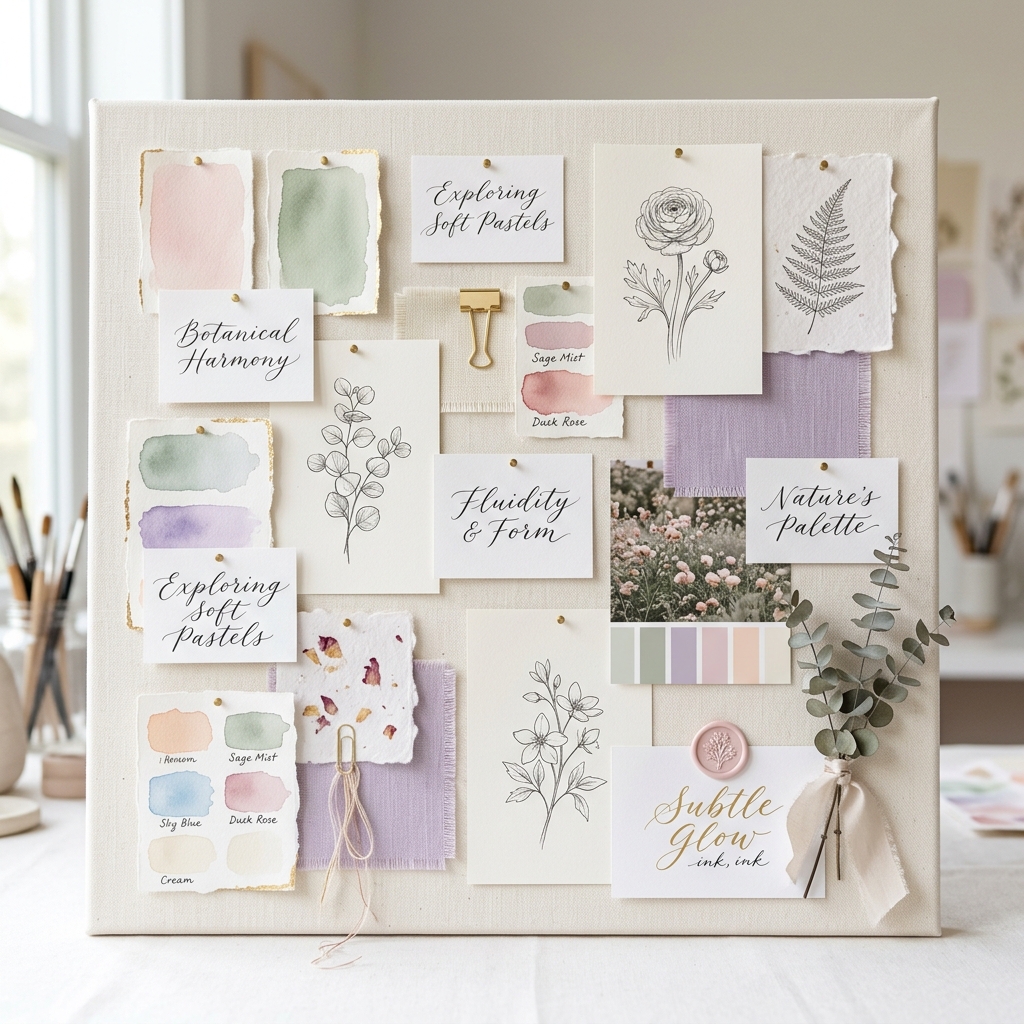
The Anatomy of a Captivating Mood Board
A successful mood board is more than just a random collection of pretty pictures. To make it a truly functional tool for your creative process, consider incorporating these essential elements:
1. Curated Color Palettes: Dedicate a section to specific color swatches. This defines the emotional tone of your work—cool blues and grays evoke tranquility, while warm ochres and deep terracottas bring energy and earthiness.
2. Tactile Textures: Introduce visual textures. This could be high-resolution photos of torn handmade paper, fabric weaves, peeling paint, or natural materials like wood and dried leaves.
3. Imagery & Inspiration: Gather photos, sketches, or artwork that capture the specific style, lighting, or composition you want to explore. These act as direct references for your work.
4. Typography & Words: Words carry visual weight. Pinning a few handwritten notes, inspiring quotes, or specific font styles helps capture the psychological essence of your concept.
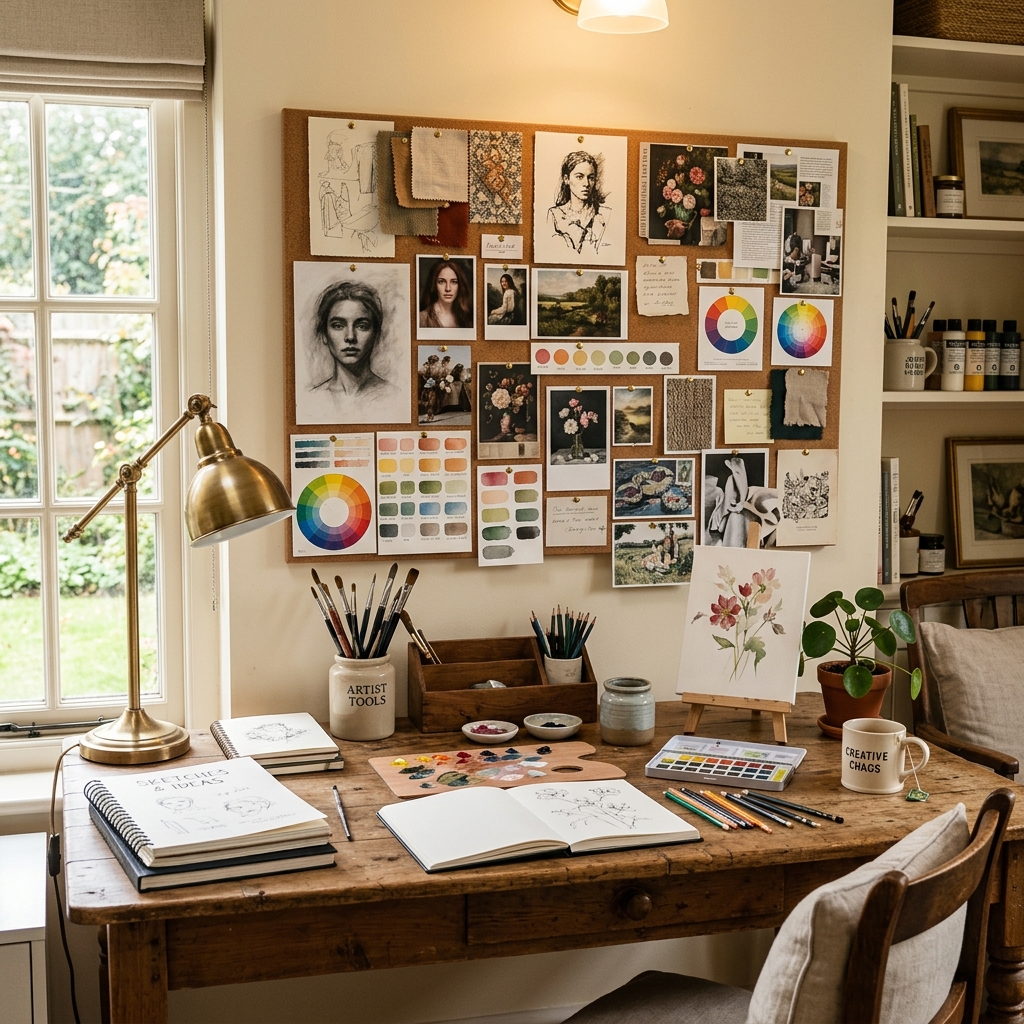
How to Create Your Own Creative Anchor
Creating a mood board is a personal and intuitive process, but these steps can guide you if you are unsure where to start:
Step 1: Define the Theme. Write down 3-5 keywords that capture your project’s soul. If you are painting a series on “serenity,” keywords might include soft light, mist, dawn, and silence.
Step 2: Collect Widely. Don’t limit yourself. Gather twice as many materials as you think you will need. Look through magazines, nature walks, Pinterest, or your own archive of sketches.
Step 3: Edit and Refine. This is the most critical step. Layout your collection and start removing elements that don’t fit the core message. Keep only what feels absolutely essential and cohesive.
Step 4: Arrange and Finalize. Play with layout, overlapping elements, and focal points. Once you are satisfied, pin them to your board or finalize your digital document. Keep it in sight as you create, allowing it to guide your decisions.
Embracing the habit of mood boarding can transform your creative process, saving you hours of directionless work and letting you paint with clarity and intent. Start building yours today, and see how your creative visions come alive!