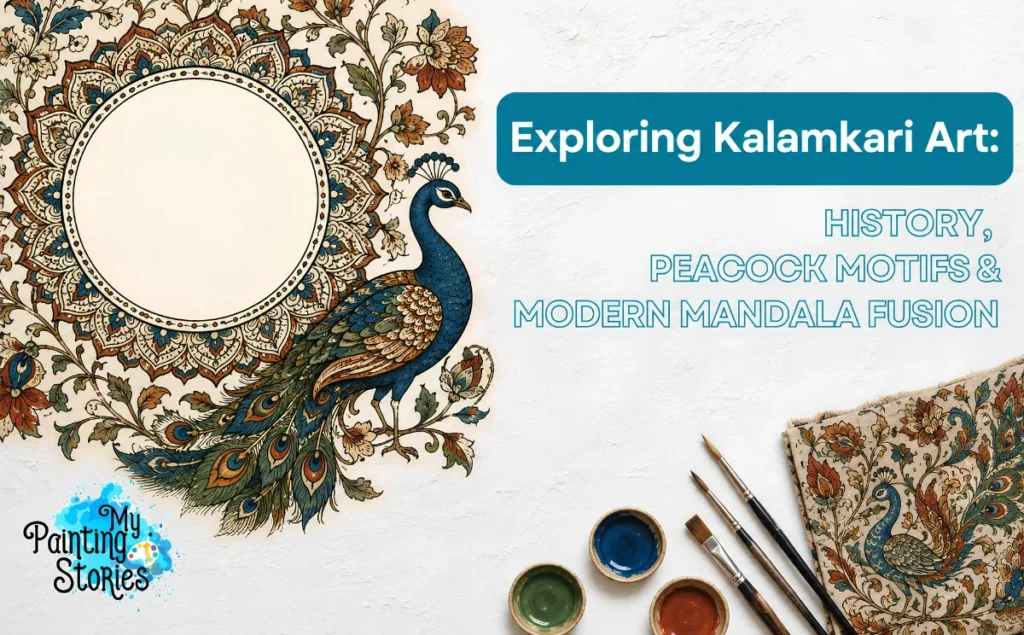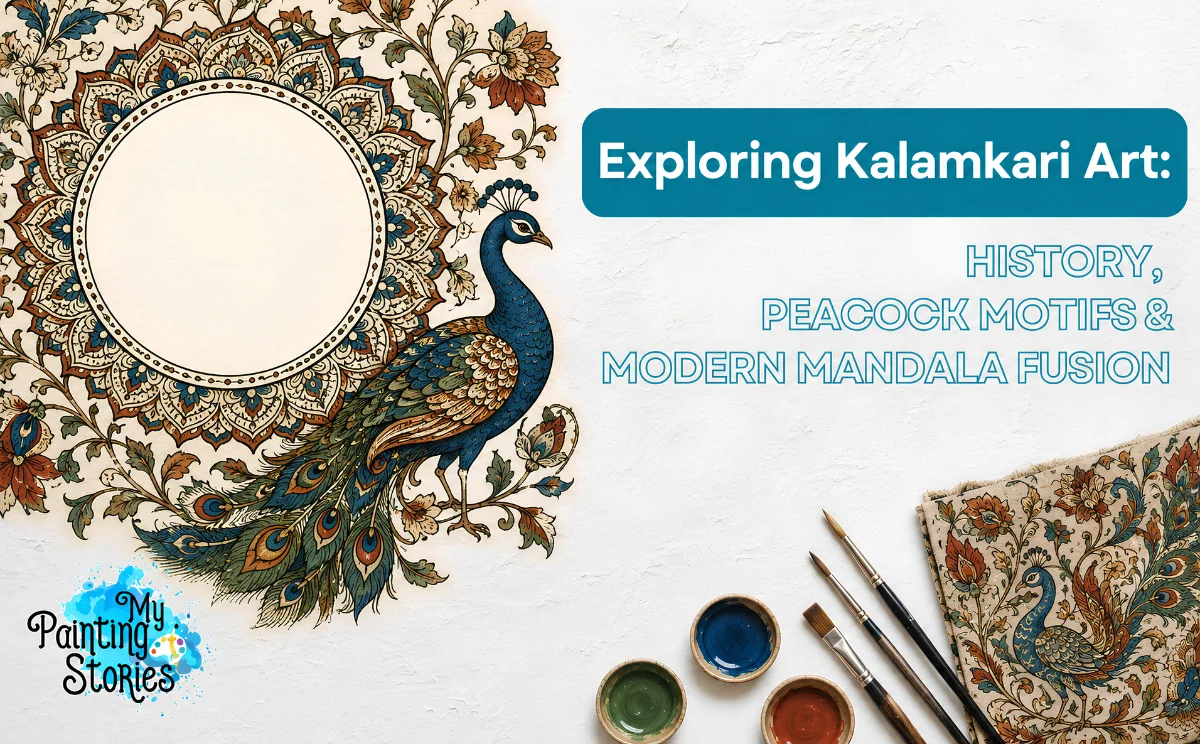
Kalamkari is one of India’s most cherished traditional art forms. Originating from the words Kalam (pen) and Kari (craftsmanship), this ancient technique traditionally involved hand-painting or block-printing organic dyes onto cotton textiles.
Today, artists are bringing Kalamkari heritage into modern homes by combining traditional motifs with contemporary geometric layouts.
The Symbolism of the Peacock in Kalamkari Art
In Indian folk art, the peacock (Mayura) represents beauty, grace, protection, and renewal. When integrated into a Kalamkari Peacock Mandala, the flowing lines of the peacock feathers wrap around symmetrical circular grids, creating a balance between organic nature and geometric order.
Traditional Kalamkari Motifs (Peacocks, Vines) + Geometric Mandala Symmetry = Modern Heritage Wall Art
Key Elements of Traditional Kalamkari Style
- Earth Tone Palettes: Natural shades like mustard yellow, deep indigo, rust red, and forest green.
- Black Outlines: Bold black borders give definition to intricate floral and animal figures.
- Intricate Fill Patterns: Decorative hatching and dotting inside each section to create visual texture.
Adding Kalamkari Art to Modern Home Decor
Handmade Kalamkari paintings serve as striking focal points in living rooms, prayer spaces, or creative studios. Framing an A4 or A3 Kalamkari Peacock Mandala brings warmth and cultural depth to modern minimalist interiors.
FAQ
The word Kalamkari originates from Persian, combining kalam (pen) and kari (craftsmanship). Traditionally done using natural vegetable dyes on cotton fabric, the style is instantly recognizable by its rich earth tones (mustard, indigo, rust red), strong black linework framing every figure, and fine internal hatchings or dotting patterns that add intricate texture.
Artists fuse the two styles by placing organic Kalamkari elements—like flowing peacock feathers, lotus flowers, and curving vines—inside the rigid, radial symmetry of a circular mandala grid. This blends the free-flowing, storytelling nature of folk art with the balanced, soothing geometry of modern mandalas, making it a popular choice for contemporary home decor.