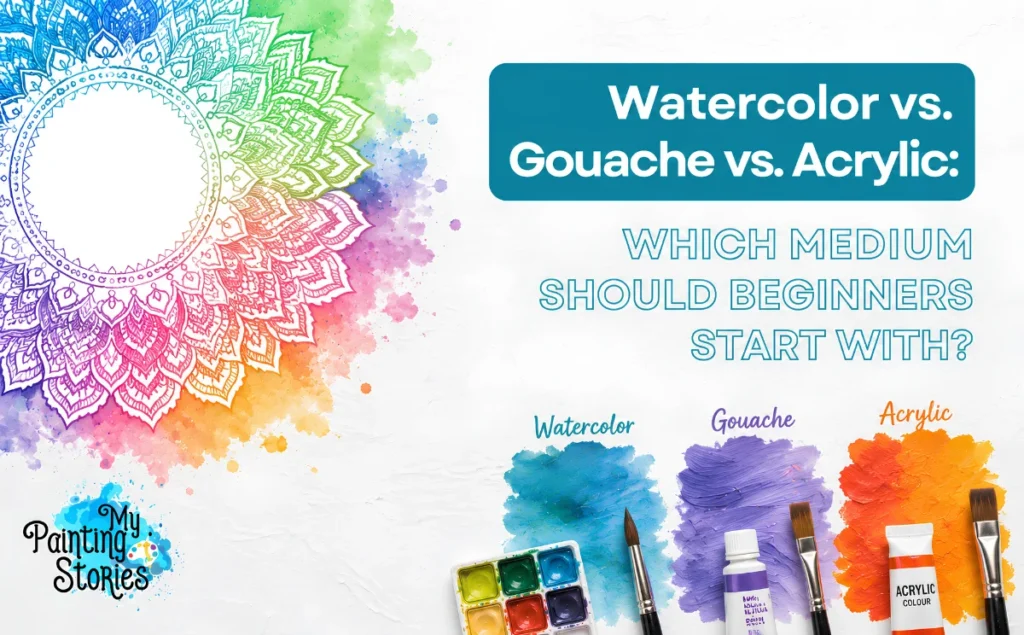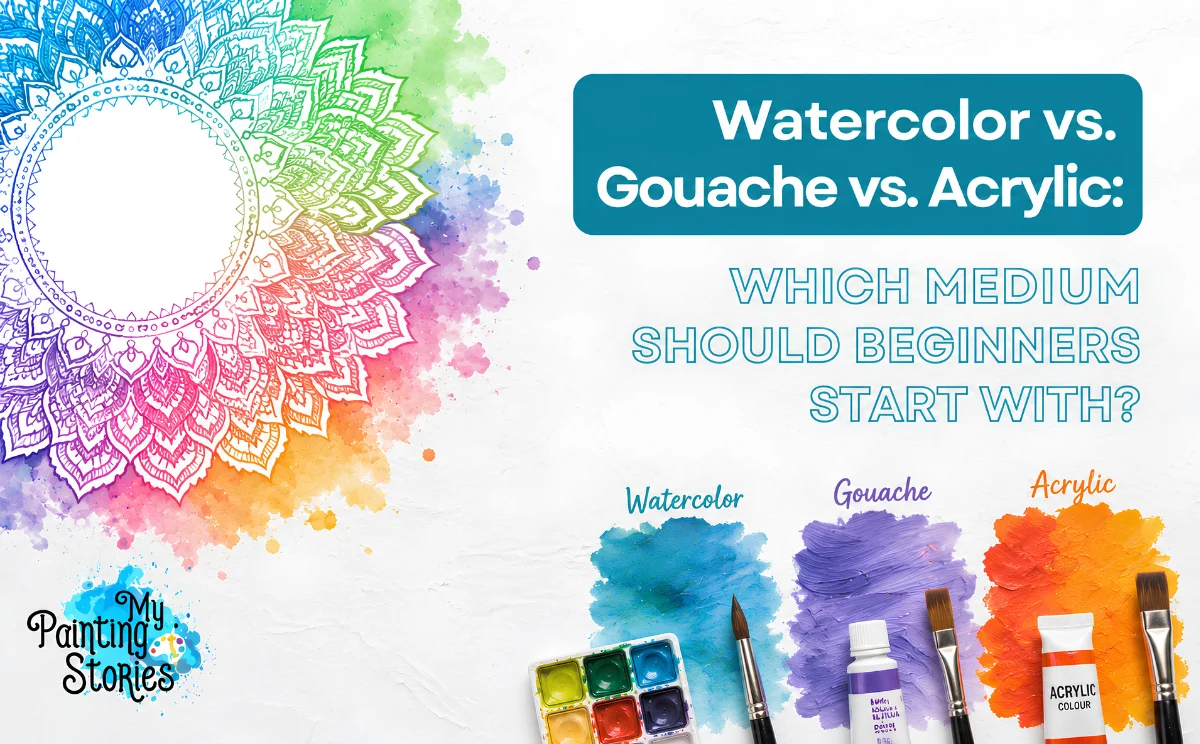
Choosing your first painting medium can feel overwhelming when staring at craft store aisles. Should you pick translucent watercolors, opaque gouache, or fast-drying acrylics?
Here is a simple, direct comparison to help you choose the right medium based on your artistic goals.
Quick Comparison Matrix
| Feature | Watercolor | Gouache | Acrylic |
|---|---|---|---|
| Finish | Transparent, luminous | Matte, opaque | Satin / Glossy, opaque |
| Drying Time | Very fast (minutes) | Fast (re-wettable) | Extremely fast (permanent) |
| Best For | Florals, landscapes, soft blends | Illustrative mandalas, poster art | Canvas wall art, 3D gemstones |
| Ease of Cleanup | Water only | Water only | Soap and water (before dry) |
Detailed Breakdown
1. Watercolor (Best for Fluidity and Calm)
Watercolors reactivate with water, allowing you to create soft gradients and delicate washes. They require high-gsm paper (300 GSM recommended) to prevent warping.
- Ideal for: Botanical art, loose landscapes, and therapeutic painting.
2. Gouache (Best for Crisp Mandalas & Folk Art)
Often called “opaque watercolor,” gouache gives you bold, flat colors that can be layered easily. If you make a mistake, you can wet it again and adjust.
- Ideal for: Traditional folk paintings like Kalamkari peacocks and intricate geometric mandalas.
3. Acrylics (Best for Bold Canvas Art)
Acrylic paint dries into a flexible plastic layer. It works on wood, canvas, paper, and fabric.
- Ideal for: Textured 3D Gemstone Mandalas and large canvas art.
Ready to Learn?
If you’re eager to master watercolor techniques or intricate mandala line work from home, explore the step-by-step masterclasses available at My Painting Stories.
FAQ
It depends on your personal working style! Gouache is often considered the most forgiving because, like watercolor, it re-wets easily for quick corrections, but like acrylic, its opacity allows you to layer lighter colors directly over darker mistakes. If you want fast, permanent results without worrying about water control, acrylic is a solid alternative.
Watercolors and gouache perform best on thick, heavy paper (300 GSM watercolor paper is recommended to prevent warping). Acrylics are far more versatile—they can be painted on watercolor paper, stretched canvas, wood panels, canvas board, and even fabric.